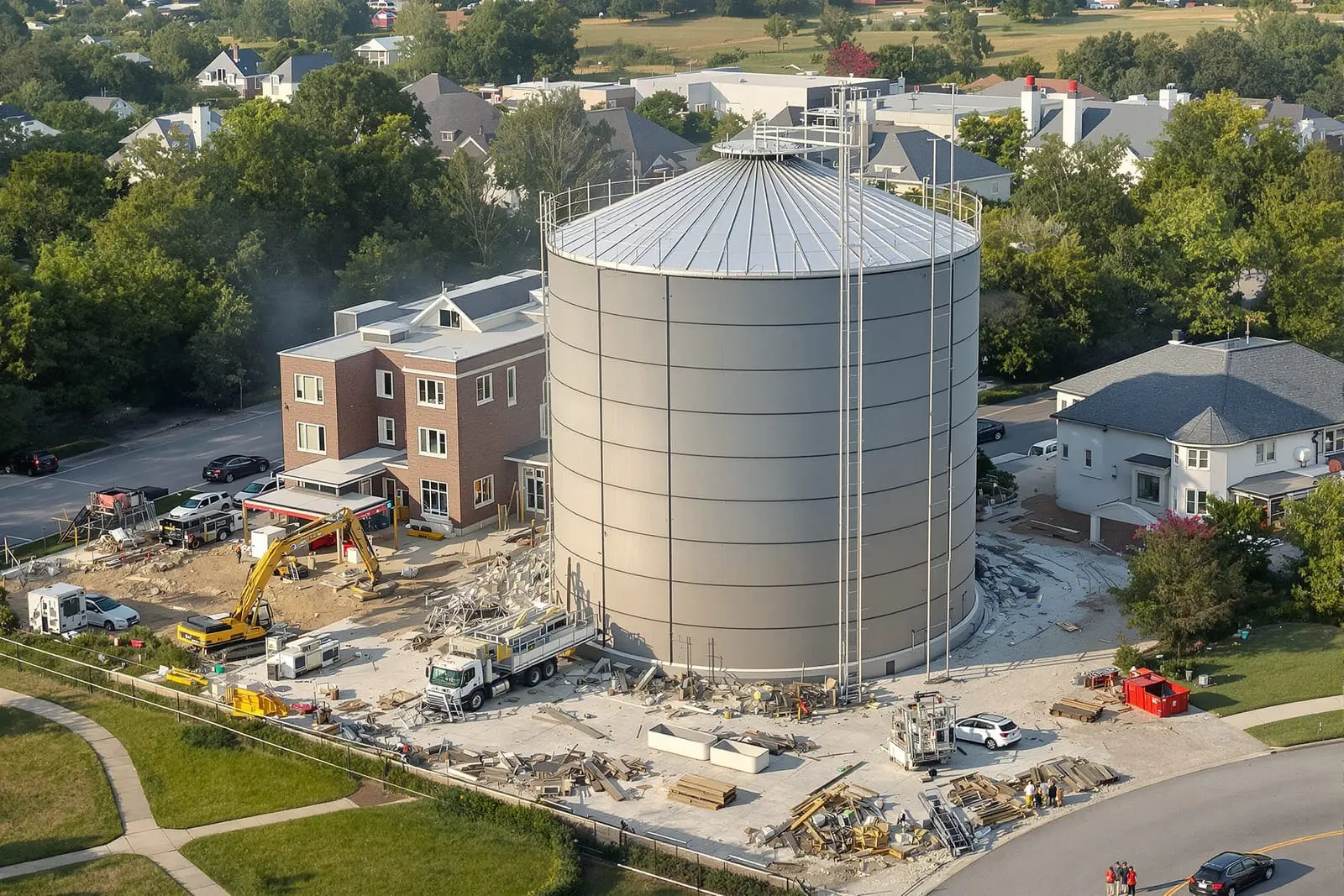
We handle tank demolition in Miami, FL along with removal of silos and stacks at industrial and agricultural sites. Crews clean and gas free vessels, then cut or mechanically dismantle them in controlled sequences. Tall stacks and silos are felled or deconstructed according to site conditions and safety plans. Clear the skyline of obsolete structures with professional help.
Wrexo Demolition Miami provides professional tank demolition throughout Miami, FL and the surrounding area. Our licensed, insured crew delivers safe, clean, on-time work with a free estimate before anything begins. Call (786) 460-2365 or request your free quote.
Tank, Silo and Stack Demolition in Miami, FL
Wrexo Demolition Miami handles complex tank, silo, and stack demolition projects across Miami and South Florida. We focus on doing the work safely in tight spaces, around active facilities, and in the hot, humid conditions that are normal here.
Our team is used to dismantling above ground fuel tanks, concrete and steel silos, and industrial exhaust stacks at plants, terminals, and older commercial sites. We look at your structure, the surrounding buildings and utilities, and the materials stored inside before we touch a bolt. In Miami, that usually means dealing with salt air corrosion, storm damage, and outdated fire protections.
When you call us, we do not guess. We send an estimator who has actually run demo work in the field, not just someone reading from a checklist. You get a real explanation of what has to happen, how long it will take, and what it will cost, including permits, disposal, and any special handling for residue or product left in the tank or silo.
How Tank Demolition Actually Works
Tank demolition looks simple from the outside, but the critical work happens before the first cut. Wrexo Demolition Miami starts by verifying what was stored in the tank, checking old MSDS sheets, labels, or your records. For fuel or chemical tanks, we coordinate cleaning and gas freeing so no flammable vapors remain. We use LEL (lower explosive limit) meters to confirm the interior is safe before hot work begins.
Next, we isolate utilities. That means capping product lines, disconnecting electrical heat tracing and level sensors, and confirming no live lines run under the tank pad. Many older Miami facilities have undocumented piping. We probe and pothole suspected lines so we do not rupture anything during demolition.
For vertical above ground storage tanks, we usually cut roof openings first to give access and reduce wind load. Depending on access and surrounding operations, we either section the tank from the top down using man lifts and torches, or we perform a controlled mechanical collapse after strategic cutting. In congested sites, top down is safer. On open terminal pads, controlled collapse is more cost effective.
We size and stage scrap as we go so trucks can haul steadily. This keeps your site from filling up with cut steel and helps shorten the overall schedule. Throughout the work, a fire watch is assigned whenever hot work is underway, using extinguishers, hoses, and a clear egress route that is actually kept clear, not just marked on paper.
Silo Demolition: Concrete, Steel, and Miami-Specific Issues
Silos in and around Miami are often reinforced concrete or steel, used for cement, aggregates, grain, or industrial powders. Their height and slender shape make them sensitive to wind and vibration, so demolition has to be planned carefully.
For concrete silos, Wrexo Demolition Miami typically uses a combination of mechanical breaking and saw cutting. We will assess whether controlled drop is possible. In dense urban or port areas, there is usually not enough clearance, so we take them down in rings from the top with high reach excavators or robotic breakers. Dust control is critical. Miami humidity helps a bit, but we still set up misting cannons and wet cutting to keep dust out of neighboring properties and out of Biscayne Bay drainage paths.
Steel silos are often cut in vertical strips or panels. We brace the structure, then remove roof and internal equipment, such as screw conveyors and filters. Only after the interior is cleared do we cut the shell. For silos with product caked inside, we plan for uneven weight distribution. We may need to vacuum or excavate material first. Ignoring that can cause a sudden and dangerous partial collapse.
Local conditions matter. The coastal environment accelerates rebar and shell corrosion, which can make silos weaker than they look. Hurricanes and past storm events may have already cracked or tilted older structures. We factor that into our method choice and keep wider exclusion zones when there is a risk of unpredictable breakage.
Stack Demolition and Working Around Operating Facilities
Stacks and chimneys present their own set of problems. They are tall, often on tight footprints, and usually surrounded by live equipment or buildings you want to keep. Wrexo Demolition Miami chooses methods that fit your site, not just what is fastest on paper.
For shorter masonry stacks, we often use a top down approach with man baskets or mast climbers. Brick and concrete are demolished in courses, pushed inward, and dropped into the interior where possible. For taller steel stacks, we remove ladders, platforms, and flues first, then cut the stack in sections and lower them with a crane. Where crane access is limited, we may use a high reach excavator or specialized stack saw systems.
Noise and vibration are big issues for stacks attached to hospitals, schools, or food plants. In those cases, we lean on saw cutting and controlled sectioning instead of heavy percussive breaking. We time the loudest tasks to match your downtime windows, which can be nights or weekends in busy parts of Miami.
Stacks often contain liners, insulation, and coatings that must be handled separately. High temperature refractories and older insulating materials can create disposal complications. We sample suspect materials in advance and pre arrange disposal, so we are not waiting on lab results with a half cut stack standing over your property.
Permits, Safety, and Local Rules in Miami
Demolition work on tanks, silos, and stacks is tightly regulated, especially when it involves fuel or chemical residues. Wrexo Demolition Miami is set up to pull the required permits with Miami Dade and the City of Miami, coordinate with fire marshals on hot work, and comply with stormwater and debris handling rules.
Projects typically need a demolition permit, site specific engineering for the demo method when heights are significant, and in some cases air quality notifications if there is potential for asbestos or other regulated materials. If the tank or silo is part of a facility that holds environmental permits, we coordinate with your environmental consultant so demolition does not accidentally put you out of compliance.
From a safety standpoint, you will see more than hard hats and vests. We build site specific work plans that address confined space entry for tank interiors, fall protection for elevated work, and lockout of lines and electrical feeds. Spotters are assigned whenever heavy equipment works near structures or power lines, which is common in crowded Miami industrial yards.
Hurricane season timing matters. For tall or weakened structures, we recommend not starting work unless we have a reasonable window of stable weather. If a storm approaches, we secure partially cut sections, remove loose scrap, and make sure cranes and lifts are properly stowed. That planning reduces the odds of weather turning a demolition site into a hazard.
Cost, Scheduling, and What You Should Decide Before Hiring
The cost of tank demolition or removing a silo or stack in Miami is driven by five main factors: size and height, material and wall thickness, past contents and contamination, site access, and required schedule. Wrexo Demolition Miami walks each of these with you so pricing is transparent.
A clean, empty steel tank in an open yard is on the lower end of cost because we can bring in larger equipment and work quickly. A corroded concrete silo with product still inside, wedged between buildings, will cost more because it demands slower, more controlled methods and more labor. If we have to work at night to avoid shutting down your operation, that can also affect price.
Before you request quotes, gather whatever information you can about what was stored in the tank or silo, any existing drawings, and the age of the structure. Knowing whether a stack has a refractory liner or a tank has double walls will change the method and disposal plan. Photos from several angles help, but an in person visit is still essential for final pricing.
In Miami, schedule also depends on permitting and utility coordination. Plan on at least a few weeks from authorization to start for anything involving fuel or chemicals, more if environmental closure is required. We can often phase work so that cleaning, utility isolation, and prep happen while you line up replacement equipment or new construction.
If you bring Wrexo Demolition Miami in early, we can coordinate with your engineer or builder so slab removal, anchor bolt cutting, and backfilling are done to the specs needed for your next phase, not just to a generic demolition standard.
“
Professional tank, silo and stack demolition, done right the first time, quality materials, honest pricing, and results that last.
Wrexo Demolition Miami
Tank, Silo and Stack Demolition Across Our Service Area