Home › Emergency and Disaster Commercial Demolition
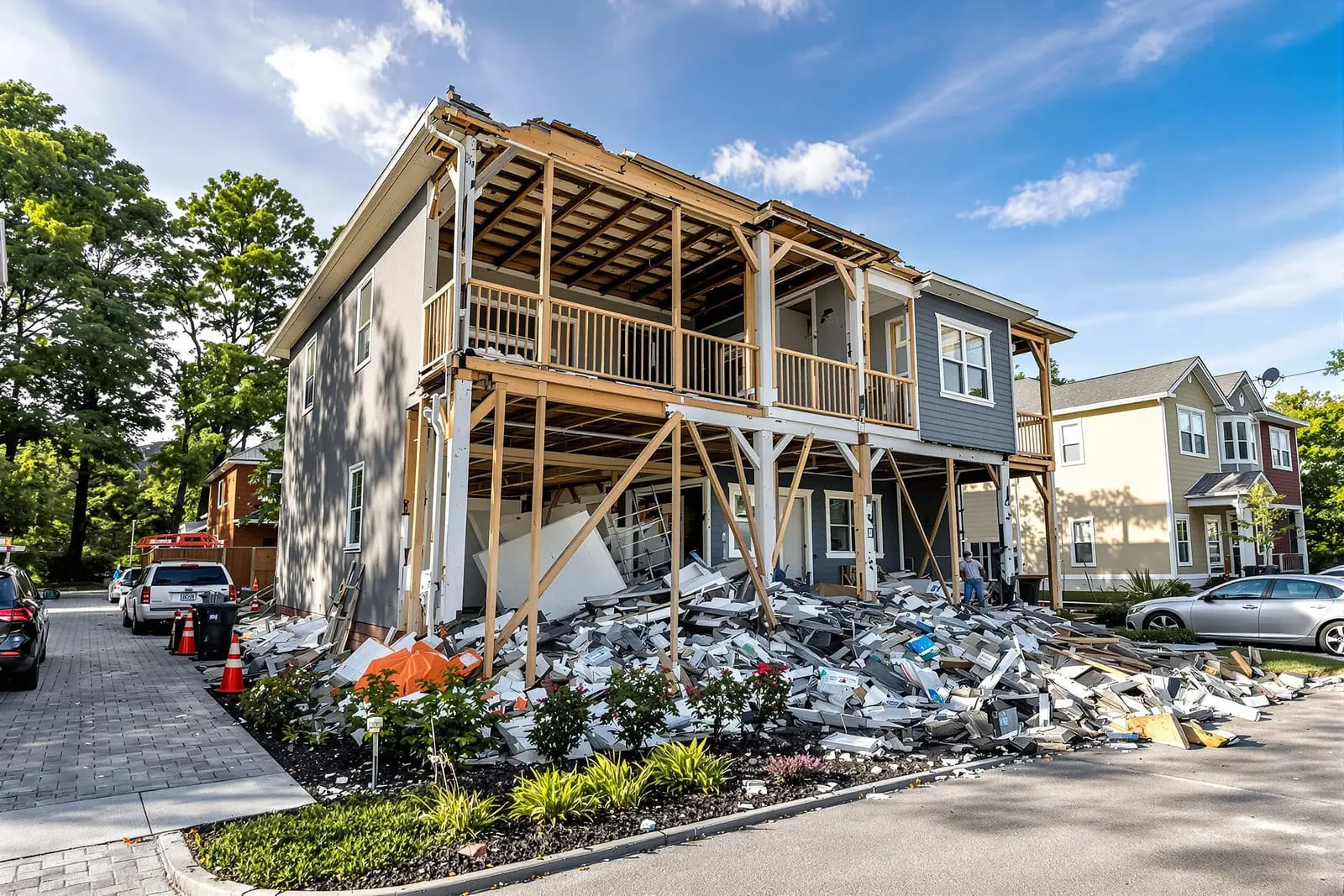
We provide emergency commercial demolition in Miami, FL when storms, fire, or collapse leave buildings unsafe. Our rapid response teams work with owners, insurers, and authorities to secure sites and remove hazards. Partial teardowns, shoring, or full demolitions are performed based on structural assessments. Protect the public and restart recovery quickly with expert help.
Wrexo Demolition Miami provides professional emergency commercial demolition throughout Miami, FL and the surrounding area. Our licensed, insured crew delivers safe, clean, on-time work with a free estimate before anything begins. Call (786) 460-2365 or request your free quote.
Emergency Commercial Demolition When Your Business Cannot Wait
When a hurricane, fire, vehicle impact, or structural failure hits a commercial property in Miami, the question is often not “who can demolish this someday,” but “who can make this safe in the next few hours.” Wrexo Demolition Miami focuses on emergency commercial demolition where time, safety, and clear communication are everything.
Our crew is on call for situations where a building or part of a structure is unsafe and must be partially or fully removed so firefighters, insurance adjusters, engineers, and restoration teams can do their work. Typical emergency calls in Miami include coastal properties weakened after a storm, strip malls with roof collapses, warehouses with fire‑damaged steel, and multi‑tenant office buildings with compromised stairwells, balconies, or façades.
From the first call, our priority is to stabilize the situation, protect everyone on site, and then remove only what must be removed to make the structure safe and code compliant. We coordinate with the City of Miami building department, first responders, and property managers so demolition supports your overall recovery plan rather than slowing it down.
How Our 24/7 Emergency Response Works in Miami
Emergency commercial demolition starts with a structured response, not a wrecking ball. When you call Wrexo Demolition Miami, we gather critical information right away: location, current hazards, utilities status, building type, and whether police, fire, or building officials are already present. This lets us roll the right equipment and crew instead of wasting time.
On arrival, our superintendent walks the site with whoever is in charge, which may be the fire marshal, a building inspector, or your facility manager. We identify immediate hazards such as leaning walls, hanging precast panels, sagging roof trusses, spalled concrete, exposed rebar, or broken glass above public sidewalks. We also confirm that electric, gas, and sprinkler systems are shut down or isolated, using lockout and tag procedures if needed.
Next, we establish a safety perimeter with fencing, barricades, and signage to keep employees, tenants, and the public out of danger. In dense Miami corridors like Brickell or downtown, this often includes temporary sidewalk closures and coordination with traffic control so pedestrians are rerouted safely.
Only after this do we decide on the level of demolition: targeted removal of failing components, partial structural demo, or fast‑track full building demolition. We document conditions with photos and video for you and your insurer so there is a clear record of why emergency demolition work was required.
Methods and Equipment Used in Disaster Commercial Demolition
The techniques we use depend on both the type of damage and the type of building. In Miami, many commercial properties are concrete block with poured concrete decks, but we also see older masonry, tilt‑up warehouses, steel frame offices, and mixed‑use structures with retail on the first floor and condos above.
For fire‑damaged interiors, we often perform selective interior demolition first. Crews manually strip burned finishes, drop damaged ceilings, remove compromised ductwork, and clear charred framing so engineers can see the real condition of the structural core. We use HEPA vacuums, misting attachments, and negative air machines where needed to keep smoke and soot particles from drifting into adjacent businesses that are still operating.
If structural elements like beams, columns, or shear walls are compromised, we bring in equipment such as excavators with concrete processors, grapples, and hydraulic breakers. For tight urban sites and multistory work, high‑reach excavators or robotic demolition machines are used instead of large standard machines to reduce vibration and allow more precise removal.
Coastal and flood‑damaged buildings present another set of challenges. Saltwater can weaken rebar and corrode steel connections. We carefully chip test sections of concrete, evaluate slab elevations affected by storm surge, and coordinate with structural engineers to decide whether partial demolition is viable or if full removal is the safer path.
Throughout the process, we separate debris at the source. Concrete, masonry, steel, aluminum storefronts, and copper are sorted as we demolish, which speeds removal and can reduce your disposal costs.
Costs, Insurance, and What Drives Pricing in an Emergency
In an emergency commercial demolition, cost is driven by risk, access, urgency, and debris volume. Wrexo Demolition Miami is transparent about these factors so you understand why a rapid response job looks different on paper than a scheduled demo months in advance.
Key drivers include:
• Structural risk level: Buildings with partial collapses, active falling hazards, or severely fire‑damaged concrete require more engineering oversight, more bracing, and slower machine work, which affects labor and equipment time.
• Access and location: Downtown Miami sites with limited staging areas, alley‑only access, or overhead power lines often require smaller specialty equipment and night or off‑hour work to reduce impact on neighbors and traffic.
• Urgency: True middle‑of‑the‑night or holiday response has higher standby and overtime costs, especially when cranes, traffic control, or multiple hauling units must be mobilized immediately.
• Environmental and hazardous materials: If the damaged area involves older roofing, pipe insulation, flooring mastics, or fireproofing, state and federal rules may require asbestos or lead testing and abatement steps before or during demolition.
We routinely work with commercial insurers and adjusters in Florida. Our team can provide detailed daily logs, load tickets, photographs, and cost breakdowns that support your claim. When your policy covers emergency stabilization or demolition, this documentation often helps speed reimbursement.
Permits, Safety Rules, and Working With Miami Officials
Emergency work does not mean ignoring the rules. It means navigating them quickly and correctly. Wrexo Demolition Miami has experience pulling emergency permits and working under unsafe structure notices issued by the City of Miami and nearby jurisdictions in Miami‑Dade County.
Depending on the situation, you may see terms like “unsafe structure,” “partial condemnation,” or “emergency shoring order” on paperwork from the building department. We review these documents with you and help align our scope so it satisfies the inspector and clears the way for repairs or reconstruction.
For immediate life safety hazards, city officials can authorize controlled demolition to remove dangerous elements ahead of full permitting. We coordinate with them to make sure any immediate actions we take are properly documented and followed by the required permits, engineering letters, and inspections.
On site, we run daily safety briefings, enforce PPE requirements, and maintain exclusion zones. We pay close attention to wind conditions and rain, especially during hurricane season, because loose debris, tarps, and partially dismantled structures behave differently under high gusts. When necessary, we pause mechanical demolition and switch to hand removal until conditions are stable again.
We also handle utility coordination, including requests to FPL for temporary service disconnects and calls to local water and gas providers. This is critical to avoid secondary disasters such as gas leaks or electrical incidents during demolition.
Common Emergency Scenarios We Handle for Miami Businesses
Over years of serving local property owners, Wrexo Demolition Miami has developed repeatable approaches for the kinds of disasters Miami businesses face most often.
Hurricane and wind damage: After major storms, we are frequently called to remove partially collapsed roof sections, parapet walls, and façade elements that are in danger of falling into streets or neighboring properties. We use aerial lifts to access high edges, install temporary bracing when practical, and then carefully peel back damaged sections so water intrusion can be controlled with new coverings.
Fire in shopping centers and warehouses: FIRE departments may leave after extinguishing the blaze, but the building can still be extremely unstable. We first remove hanging roof decking, burned trusses, and sagging metal panels to prevent collapse, then clear interior debris so restoration teams can dry the structure and treat for smoke damage.
Vehicle impacts: In Miami, we see cars or trucks drive into retail storefronts or parking garage columns more often than owners expect. We provide rapid shoring for damaged columns or walls, cut away collapsed sections of CMU and slab, and coordinate with structural engineers to determine how much of the bay must be demolished to restore structural integrity.
Water and mold‑compromised interiors: While not as dramatic as a collapse, long‑term leaks or flood damage can make floors unsafe and wall cavities unstable. We perform controlled interior demolition to remove saturated drywall, insulation, and flooring, exposing the structure so drying and mold remediation can begin without risking further damage.
Why Miami Property Owners Choose Wrexo for Emergency Commercial Demolition
A good emergency demolition partner acts as part of your recovery team, not just a contractor. Wrexo Demolition Miami focuses on minimizing your total downtime by removing hazards quickly, keeping what can be saved, and giving you and your design or restoration team a clean slate to rebuild.
We understand that you may be dealing with stressed tenants, worried employees, and tight business interruption timelines. Our supervisors communicate clearly about what will happen each day, what areas must stay closed, and when you can expect specific milestones such as “unsafe wall removed,” “interior cleared to slab,” or “debris fully hauled.”
Because we work only in this region, we are familiar with South Florida weather patterns, local material suppliers, landfill and recycling facilities, and regional engineering practices. This local knowledge helps us source emergency bracing lumber, tarps, and specialized equipment quickly when supply chains are strained after large storms.
Before you hire any emergency commercial demolition company in Miami, ask about their licensing, recent projects involving unsafe structures, and how they coordinate with your insurer and engineers. If you would like, we can walk you through past local case studies and connect you with references who dealt with similar disasters. Our aim is to make the hardest days for your property a bit more manageable through disciplined, safe, and responsive demolition work.
“
Professional emergency and disaster commercial demolition, done right the first time, quality materials, honest pricing, and results that last.
Wrexo Demolition Miami
Emergency and Disaster Commercial Demolition Across Our Service Area